Innovation in the industrial sector often focuses on bigger lasers or faster robots. However, as our parent company, Cogbill Construction, recently demonstrated, some of the most impactful ‘machinery’ in a modern shop is AI-assisted coding manufacturing.
A recent article in The Fabricator highlights a significant milestone for the Cogbill team. Faced with the choice between expensive, rigid “off-the-shelf” software and the limitations of traditional spreadsheets, they chose a third path: Building a custom ERP using AI, our new Cogbill-ERP.
Beyond Spreadsheets: AI-Assisted Coding Manufacturing for a Paperless Shop
The story follows Cogbill’s Shop Foreman, Jeff West. A veteran welder by trade, West utilized AI agents like Claude to bridge the gap between his deep knowledge of fabrication and the complexities of JavaScript.
The result is a custom-built platform that handles the “heavy lifting” of shop management software:
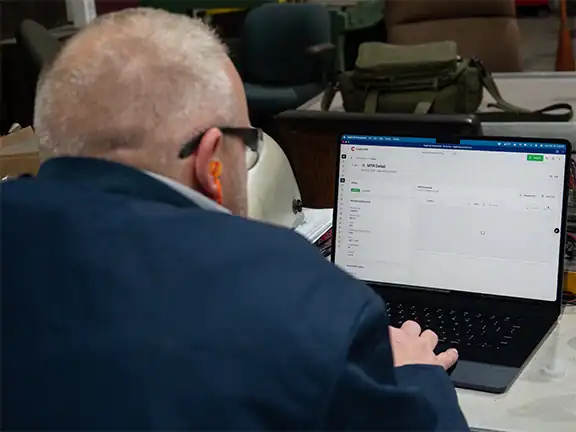
- MTR Database Management: Cogbill transitioned from thousands of physical pages of MTRs to a searchable, digital database.
- Data-Driven Quoting: By tracking actual labor hours against estimates in real-time, the shop can now run operations by the numbers rather than just intuition.
- Optimized UX/UI: Using AI to perfect the user experience, they created a system with large-button interfaces designed specifically for use in a rugged shop environment.

At RedLineIPS, we believe Cogbill’s journey is a prime example of how small fabrication shops can leverage Artificial Intelligence to compete with much larger organizations. By automating the administrative bottlenecks of quality control and traceability, as well as production management, they have freed up their team to focus on what matters most: high-quality construction.
Read the full story at The Fabricator: How a small fabrication shop built its own ERP with AI
FAQ's
Typical Queries and Information
What is MTR traceability in metal fabrication?
It is the ability to track a finished part back to its original Material Test Report, verifying that the material meets all engineering and safety specifications.
How does AI help in a fabrication shop?
We use AI to assist in coding custom software modules and perfecting the user interface, making complex data entry accessible to everyone on the shop floor.
Is Cogbill Construction a paperless shop?
While we still use printed drawings for fabrication, all MTRs, QC check sheets, and job communications are handled digitally to reduce errors and speed up delivery.
